Gas Furnace Repair in the Bronx
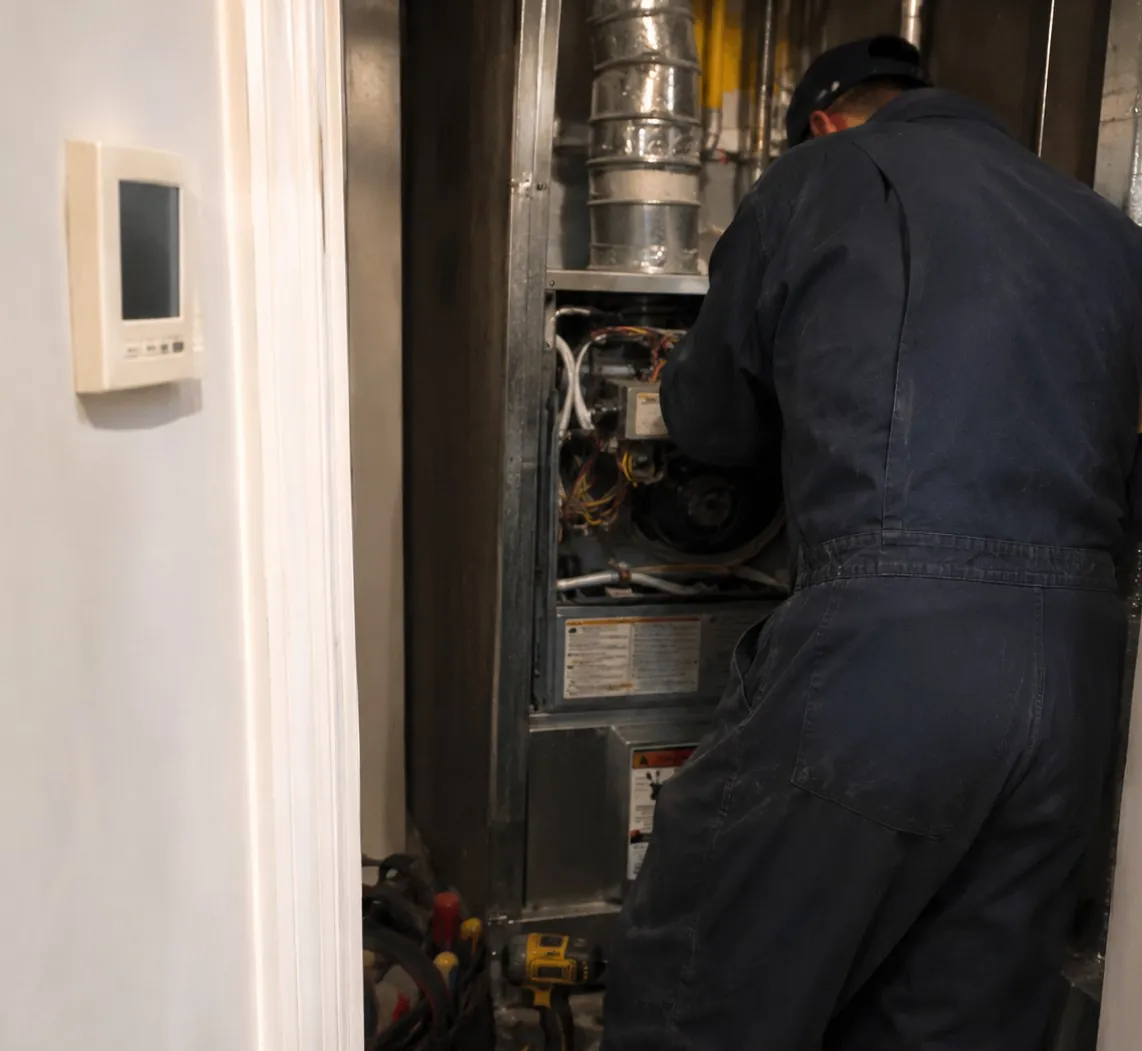
Ephraim Heating & Air repairs gas furnaces in Bronx houses and apartments: upflow furnaces in hall closets and utility rooms, and furnaces in cellars feeding ducts to the floors above. Standard and high efficiency furnaces, single stage, two stage and variable speed.
Parts we replace on furnaces:
- Igniters, hot surface and spark
- Flame sensors and rollout switches
- Inducer motors, plus pressure switches and the tubing to them
- Burners and gas valves
- Limit switches and high temperature cutoffs
- Blower motors, run capacitors and blower wheels
- Control boards, transformers and door switches
- Thermostats and thermostat wiring
- Condensate traps, hoses and condensate pumps on high efficiency furnaces
Furnace Not Heating: Common Causes in Bronx Homes
Every gas furnace runs the same start-up order, and where it stalls points to the part. Thermostat call, then inducer, then pressure switch, then a hot igniter, then gas, then a flame the sensor can prove, then the blower. A furnace that clicks and never lights has stopped early in that chain: a pressure switch that will not close, a blocked vent or a cracked igniter. A furnace that lights and drops out after a few seconds has a flame sensor that cannot prove the flame.
A furnace that runs but blows cold air is usually tripping its limit on a clogged filter or a closed return. Closet furnaces are hit hardest by this, because a louvered door or a return grille blocked by stored boxes starves the blower of air.
Closet and Cellar Furnaces in Bronx Houses
A furnace in a small closet works in a tight space. Filters get skipped because they are hard to reach, the return air has to come through the door, and the flue runs through walls. Those furnaces overheat, short cycle and wear out igniters and limit switches faster than a furnace in an open cellar.
Cellar furnaces in older houses often feed ducts that were added after the house was built around a boiler, so top floor rooms can run cooler. Duct dampers, blower speed and return air are the places to look before blaming the furnace.
Furnace Repair or Replacement in the Bronx
Igniters, sensors, switches, inducers, blower motors and boards are repairs. A cracked heat exchanger is the failure that ends a furnace, along with parts that are no longer available for an older model.
Buildings heated with steam or hot water are covered under boiler repair in the Bronx. For cooling, see AC repair, which covers the coil that often sits on top of the furnace. We repair furnaces in Van Nest, Crotona Park East and the rest of the Bronx service area.